
NEW YORK, NY / ACCESS Newswire / January 7, 2026 / It's surprising how easily an e-commerce business can lose money without ever realizing it. Overlooked issues such as abandoned carts, wasted ad spend, or inaccurate product listings are silently draining profits. These "hidden" revenue leaks may seem minor, but they add up quickly and hold businesses back from reaching their full potential.
For business owners, the real challenge is not just making more sales but stopping the leaks that are draining profits. Identifying these inefficiencies isn't just about problem-solving; it's about unlocking the untapped potential in growing businesses.
This post uncovers the most common revenue leaks and shares quick solutions that can boost profits fast. From optimizing ads to fixing those missed upsell opportunities, it shows how to stop losing money and start growing an e-commerce business.
The Hidden Revenue Leaks Silently Draining E-commerce Brands' Profits
1. Cart Abandonment
Cart abandonment is a serious problem for e-commerce businesses. In 2024, 70.19% of online shopping carts were abandoned by shoppers. Customers often leave their carts due to slow delivery speeds, which account for 23% of abandoned carts. The longer customers take to make a decision, the more likely they are to abandon their purchase.
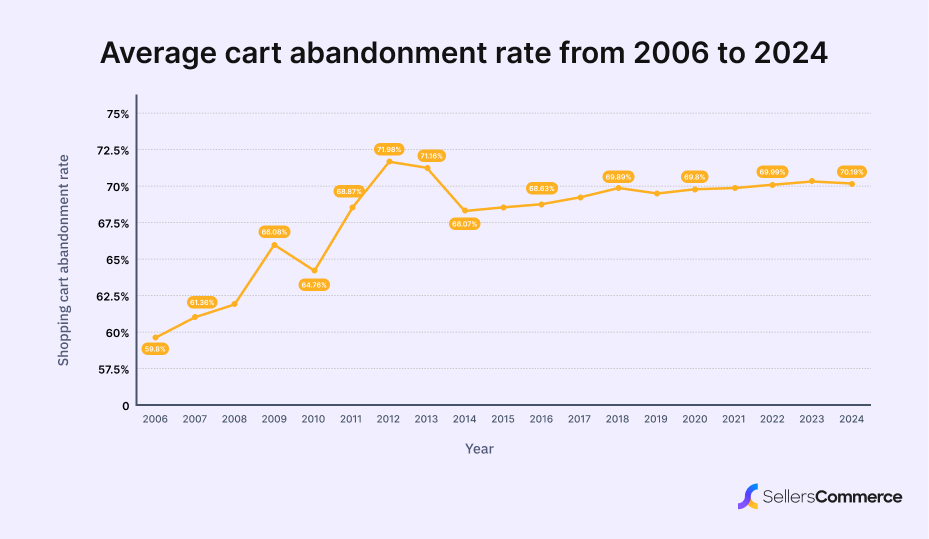
Image source: SellersCommerce
How It Affects Revenue
For small businesses, cart abandonment means lost sales. With 70% of potential customers walking away without completing their purchase, this results in a big hit to revenue. These abandoned carts are missed opportunities to increase sales and grow the business.
Solution
To fix this, addressing delivery concerns is key. Slow shipping and poor tracking are major drivers of cart abandonment. With e-commerce automation platforms, online businesses can monitor their Late Shipment Rate and Valid Tracking Rate (VTR) in real time.
If there are issues with tracking details or delayed shipments, it flags them immediately, enabling businesses to take corrective action before customers are discouraged by unclear delivery times. Automating alerts for these shipping issues and sending timely abandoned cart emails helps businesses recover up to 10% of lost revenue.
It also optimizes shipping processes, ensuring accurate tracking numbers are uploaded and shipped on time, keeping customers informed and more likely to complete their purchase. Here, automation software tools streamline their operations, fix delivery issues, and turn abandoned carts into recovered revenue.
2. Inefficient or Wasted Ad Spend
Running ads without proper targeting or optimization is a common mistake for many e-commerce operators and founders/brands. Poorly managed campaigns can easily result in high costs without significant returns.
How It Affects Revenue
When ads are poorly targeted or run on irrelevant keywords, businesses waste money that could be better spent elsewhere. High ACoS (Advertising Cost of Sales) means spending more on ads than making in sales, leading to an inefficient use of the marketing budget.
Solution
Marketplace sellers probably have ads bleeding money right now, and you don't even know where. High ACoS keywords, zero-sale search terms, campaigns without negatives, and hidden gems buried in auto campaigns, but with the PPC waste detection tool, brands can pull it all into one place and tell exactly what to cut, what to scale, and where to double down.
The tool automatically identifies underperforming ads and provides clear recommendations, ensuring businesses stay profitable without having to babysit PPC every day. Automation helps make smarter, data-driven decisions, keeping ad spend efficient and digital business growing.
3. Inaccurate Product Listings
Inaccurate or poorly optimized product listings on e-commerce platforms are a major roadblock for businesses. Small mistakes like missing keywords, incorrect descriptions, or low-quality images can dramatically affect how products perform online.
How It Affects Revenue
Listings that don't rank well or fail to convert will drive potential customers away, leaving brands with lost sales. If products aren't visible in search results or fail to catch a shopper's attention, the revenue will inevitably suffer.
Solution
Fast-scaling e-commerce businesses already know how fragile rankings are. One missed keyword, one blocked word, or one low-quality image, and the listing can quickly fall behind. With product listing audit software, brands can analyze ASINs to identify high-performing keywords that deliver actual sales, not empty clicks. These keywords strengthen manual campaigns, reduce wasted spend, and support consistent growth.
E-commerce sellers, especially those selling on Amazon, will never lose a sale because of an invisible problem again. It identifies exactly where listings need improvement, ensuring they're fully optimized to drive visibility, clicks, and ultimately, sales.
4. Missed Upsell & Cross-sell Opportunities
Many times, category leaders in e-commerce ignore suggesting additional products to customers during their shopping experience, which means they are missing out on valuable opportunities to increase sales. Many businesses miss easy upsell and cross-sell opportunities, which end up costing them revenue.
How It Affects Revenue
By not recommending complementary products or higher-value items, companies miss out on increasing the average order value and maximizing sales per customer. These missed opportunities prevent businesses from fully capturing the potential of every sale.
Solution
To fix this, implement upsell and cross-sell strategies at key moments, such as during the checkout process and on product pages. By suggesting related items or upgrades, it can easily increase order value without any additional effort from the customer.
Identify which products are best suited for upselling or cross-selling based on customer behavior and purchasing patterns. This allows brands to automatically present the most relevant options to increase revenue with minimal manual effort.
5. Underpricing or Overpricing
Setting the wrong price for products can have a significant impact on revenue. Whether it's underpricing to attract customers or overpricing to increase margins, both approaches can hurt marketplace sellers' bottom line in different ways.
How It Affects Revenue
Underpricing might look like a quick way to drive sales, but it eats into margins and reduces what can be reinvested back into the business. On the other hand, overpricing can drive potential customers away, reducing sales volume and making it harder to stay competitive.
Solution
To optimize pricing, use competitive pricing tools to analyze market trends and adjust your prices accordingly. This revenue optimization engine helps you monitor competitor pricing and customer demand, ensuring that products are priced just right, competitive yet profitable.
With automated insights from tools, sellers can stay ahead of pricing fluctuations and ensure their products are always priced optimally, boosting both sales and margins. This way, brands strike the perfect balance between attracting customers and protecting profitability.
6. High Return Rates
High return rates are a common challenge for e-commerce businesses. Customers often return products due to dissatisfaction, misalignment with their expectations, or product defects.
How It Affects Revenue
Frequent returns not only cut into profit margins, but they can also harm customer trust and loyalty. As return rates climb, overall profitability suffers, and it becomes more difficult to build long-term relationships with customers.
Solution
To reduce return rates, focus on improving product descriptions and providing accurate, detailed information. Offering better sizing guides and clear product images can help set correct expectations, ensuring customers know exactly what they are buying. Additionally, enhanced quality control throughout the production and shipping processes will minimize defects and improve product consistency.
Using the automated account health scanner, like SellerQI, businesses can track customer feedback and identify common reasons for returns, allowing for proactive adjustments to product listings and quality standards. By addressing these issues head-on, businesses can improve customer satisfaction, reduce returns, and boost profitability.
7. Inventory Mismanagement
Inventory mismanagement, whether it's running out of stock or overstocking products, is a common problem for e-commerce business owners. Both scenarios can negatively impact operations and the bottom line.
How It Affects Revenue
Stockouts mean missed sales opportunities, as customers cannot purchase products that are out of stock. On the other hand, excess inventory ties up valuable capital, which could have been better invested elsewhere, and often leads to markdowns or discounted sales to clear excess stock.
Solution
The key to solving inventory mismanagement is automating inventory tracking and using data-driven insights to forecast demand. Automated inventory management software systems can help you monitor stock levels in real-time and predict future trends, ensuring you stay well-stocked without overcommitting.
Brands managing large product catalogs get clear visibility of products with low stock directly in their dashboard, allowing them to take action before running out. It also helps forecast demand trends, so businesses can adjust their stock levels accordingly, avoiding both stockouts and excess inventory. This ensures that capital is efficiently utilized and sales opportunities are maximized.
8. Inadequate Customer Support
Slow or unhelpful customer service can have a significant impact on an e-commerce business. Customers expect timely, efficient assistance when they encounter issues, and failure to meet these expectations can damage reputation.
How It Affects Revenue
Poor customer support often results in negative reviews, which can tarnish your brand's image and drive potential customers away. It also reduces customer loyalty, as unhappy customers are less likely to return or recommend products. In the end, this leads to lost sales and a decrease in overall revenue.
Solution
To improve customer service, consider implementing workflow automation software that can provide faster, more efficient responses. It helps ensure that customers receive the assistance they need promptly, enhancing their experience and increasing the likelihood of repeat business.
Using this software, performance-oriented e-commerce teams can track customer service metrics and identify common pain points, allowing for quicker resolution of issues. By enhancing support, it not only boosts customer satisfaction but also protects revenue and brand reputation.
9. Not Tracking Key Metrics
Failing to track important key performance indicators (KPIs) like conversion rates, customer lifetime value, and ACoS can lead to missed opportunities for optimization. Without these insights, businesses are left guessing about what's working and what's not.
How It Affects Revenue
Without clear data, it's difficult to spot inefficiencies, adjust strategies, or identify areas for improvement. This lack of insight leads to poor decision-making, resulting in lost sales, wasted ad spend, and reduced profitability.
Solution
To fix this, businesses should regularly monitor key metrics and leverage an operations visibility dashboard that provides actionable insights. By tracking KPIs like conversion rates, ad performance (ACoS), and customer value, businesses can identify underperforming areas and make smarter decisions.
This e-commerce process automation solution helps businesses track these key metrics automatically, providing real-time data on sales trends, ad spend, and profitability. With SellerQI, businesses can make data-driven decisions quickly and efficiently, boosting revenue and eliminating inefficiencies. Regularly reviewing these metrics ensures e-commerce marketers are always optimizing for growth and profitability.
10. Compliance Penalties
Non-compliance with e-commerce regulations, whether related to product safety, taxes, or intellectual property, can lead to significant issues for businesses. These regulatory requirements can be complex and often change, making it challenging for entrepreneurs to stay on top of everything.
How It Affects Revenue
Failing to comply with regulations can result in costly fines, penalties, or even account suspension, which can severely disrupt operations and revenue streams. Non-compliance not only risks financial penalties but also damages your brand's reputation, leading to a loss of customer trust.
Solution
The key to avoiding compliance issues is staying up to date with the latest e-commerce regulations and continuously monitoring your business for potential violations. E-commerce compliance and audit software help businesses stay compliant by automating compliance tracking and alerting them to any potential issues.
It provides real-time alerts for policy violations, ensuring you never miss a compliance update. The tool flags potential issues and offers actionable solutions to correct them, whether it's adjusting your listings, removing restricted items, or making tax-related adjustments.
By automating compliance tracking, marketplace sellers avoid penalties and stay on the right side of regulations, keeping operations smooth and revenue intact.
Why Automation Protects E-Commerce Profits
Most of the issues outlined above have one thing in common: they stem from tasks that slip through the cracks when teams rely on manual monitoring. As an e-commerce brand grows, keeping track of every keyword, listing error, return trend, and policy update becomes unrealistic without an automated system in place.
Automation changes this by bringing all operational signals into a single, structured workflow.
Turning scattered data into clear, actionable insights: Instead of jumping between advertising dashboards, product pages, and inventory reports, automation tools consolidate everything in one place. This makes it easier to see whether it's a high-ACoS keyword, a suppressed listing, or sudden spikes in returns.
Detecting problems the moment they appear: Revenue leaks often start small: a keyword that stops converting, a listing missing images, a recurring customer complaint. Automation monitors these signals in real time. When alerts are triggered early, businesses can fix problems before they impact performance or customer experience.
Improving decision-making with reliable, real-time data: Many revenue losses come from delayed or incomplete information. Automation provides up-to-date metrics on performance trends, ad efficiency, customer behavior, and operational risks. With this clarity, businesses can decide where to cut costs, where to reinvest, and how to improve overall efficiency without relying on assumptions.
In simple terms, automation acts like an operational safety net: it keeps the business compliant, the listings healthy, the ads efficient, and the workflows organized.
Growth Starts With Plugging The Leaks
E-commerce growth slows the moment hidden revenue leaks go unnoticed. Cart abandonment, wasted ad spend, weak listings, and rising return rates compound quickly, making early detection essential.
E-commerce process automation solutions like SellerQI offer the real-time visibility needed to catch issues before they become costly, highlighting gaps across ads, listings, inventory, and compliance. Fix the foundations, and sustainable growth follows naturally.
About Sellerqi
This article explores the most common revenue leaks that quietly drain profits from e-commerce businesses and shows how automation can fix them fast. From cart abandonment and wasted ad spend to inaccurate listings and poor customer support, it highlights the operational gaps that limit growth. Each issue is paired with a practical, data-driven solution-many powered by automation tools like SellerQI-to help brands recover lost revenue, improve efficiency, and make smarter decisions. By identifying hidden leaks early and streamlining processes, e-commerce sellers can protect their profits, optimize performance, and build a stronger foundation for long-term, scalable growth.
Media Contact
Contact Person: Michael
Company: Sellerqi
Email: support@sellerqi.com
Website: https://www.sellerqi.com/
SOURCE: Sellerqi
View the original press release on ACCESS Newswire